
Fort Pierce Address History Sources
No single Fort Pierce index covers a house from the present to the city’s earliest years. The Saint Lucie County Property Appraiser supplies the current parcel, ownership, legal description, sale leads, and separate situs and owner-mailing addresses. The St. Lucie County Clerk’s documents establish title. Household sources then test who lived there. Each source has a different date span and standard of proof.
| Source | Years It Covers | Where Held | What It Shows |
|---|---|---|---|
| Parcel card and sale history | Current roll and listed transfers | Property Appraiser | Owner, parcel ID, legal description, sale and building clues |
| Official Records | 1980 to present online | Clerk Acclaim | Parties, instruments, book/page and public images |
| Historical Deeds | 1905 to 1960 online project | St. Lucie Clerk | Early deed parties and transfer references |
| Deed-book bridge | 1960 to 1979 | Clerk Research and counter | Transfers between online date routes |
| Federal census | 1950 and earlier public | NARA and library databases | Household members in a census year |
| Directories and newspapers | Collection-specific | Libraries and digital archives | Listed occupants, occupations and notices |
| Permits and code cases | System coverage varies | Fort Pierce or request | Alterations, applicants and case events |
Start with the newest official fact, then move one link at a time. A parcel sale reference can point to a deed, and the deed’s legal description can keep the trail on the same land when a street name or number changes. Previous residents remain a separate question because a deed names title parties, not everyone in the home.
Anchor Fort Pierce Past Residents
Resolve the modern address through the Saint Lucie County Property Appraiser Property Search. Copy the ParcelID, exact situs address, owner name, full legal description, subdivision and lot or block, plus any sale book/page reference. The situs is the property being assessed. The owner mailing address is where tax mail goes, and it may be elsewhere. Neither field proves occupancy.
The legal description is the durable key. Street numbers can shift, corner lots may face a different road, and a parcel can be split or combined. Lot, block, subdivision, plat references, or measured boundaries identify land more reliably. Homestead status may support an owner-occupancy theory, but it is not a roster of past residents and is not conclusive.
- Situs address
- The location of the assessed parcel, distinct from the owner’s tax-mail address.
- Legal description
- The recorded identity of land, often by subdivision, lot and block or measured boundaries.
- Chain of title
- The linked sequence of recorded transfers for the same land.
Walk St. Lucie Deeds Backward
The Clerk’s Acclaim Official Records search accepts a party name, book/page, instrument number, document type, and, with enhanced access, a date range. A result may identify parties and roles, document type, recording date, instrument number, Official Records book/page, and a public image. Read the image when available because the legal description and return-to details help separate people with the same name.
- Open the current parcel card and copy its legal description and acquisition reference.
- Retrieve the current owner’s purchase deed and identify the seller, called the grantor.
- Search that seller as an earlier buyer, called the grantee, and find the matching acquisition deed.
- Compare the legal description at every transfer. Never carry a name backward without the same land.
- Repeat through the proper date route, then ask Clerk Research for the bridge or a missing book.
A grantor gives or sells an interest; a grantee receives it. Mortgages, liens, and satisfactions can date a connection but are not title transfers. For an absent image, use the Clerk Public Records Request, fax, mail, or fourth-floor Research desk. The form gives a usual two-to-seven-business-day range and accepts book/page or party-and-year identifiers.
See the official modes in the Clerk name-search screen.
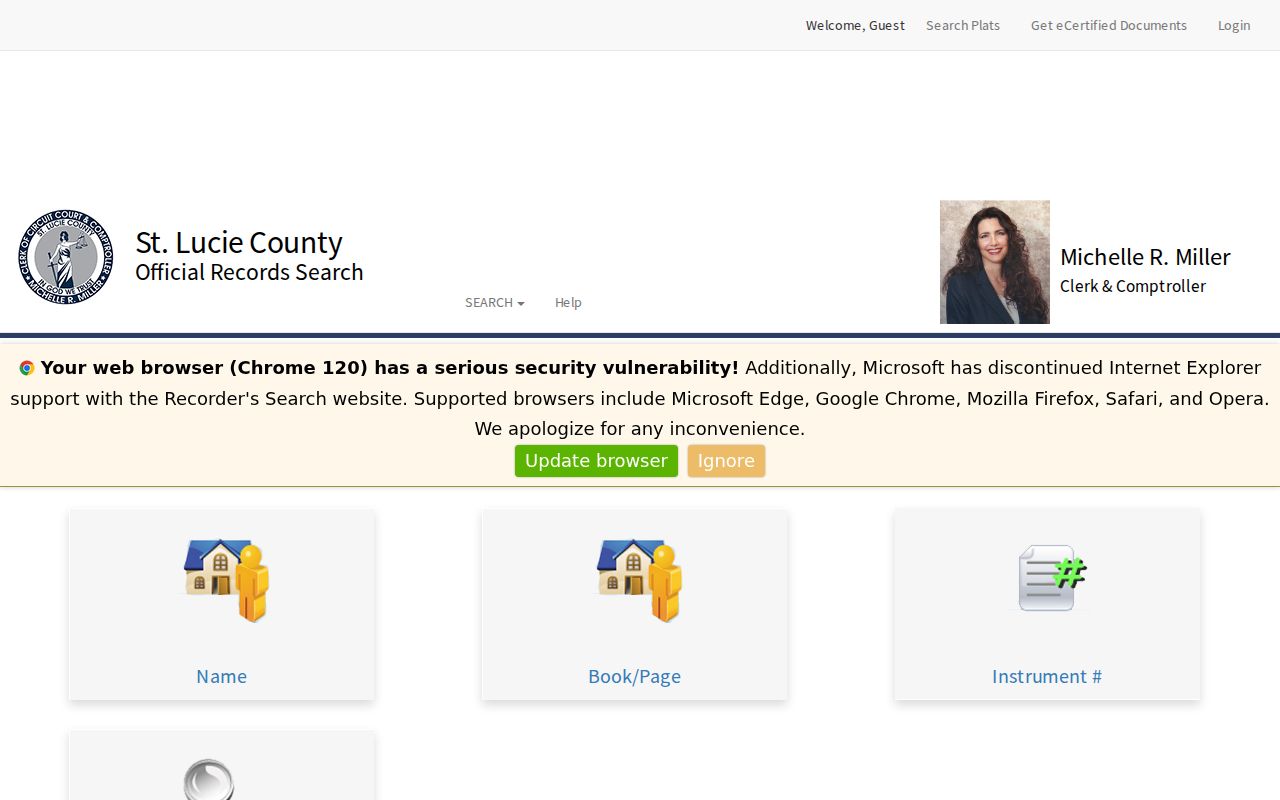
Name, book/page, and instrument routes support the handoff from a parcel sale entry to a deed.
Bridge Fort Pierce Deed Eras
St. Lucie’s online deed record is not one seamless timeline. The Clerk advertises historical deeds from 1905 through 1960 and ordinary Official Records online from 1980 forward. The years 1960 through 1979 are separately labeled and may require Research staff, office terminals, or deed books. Older official pages state other modern cutoffs, so the current Recording Department routes control. A blank modern result does not prove no transfer occurred.
Use the Historical Deeds Public Search for the early span. Controls include type, year, party role, surname or business, and beginning letter. Book/page references from a later deed help when spelling varies. Title before St. Lucie County’s creation in 1905 may lead into predecessor Brevard County or state and federal land records.
The early interface shows why previous residents research must change tools at the date boundary.
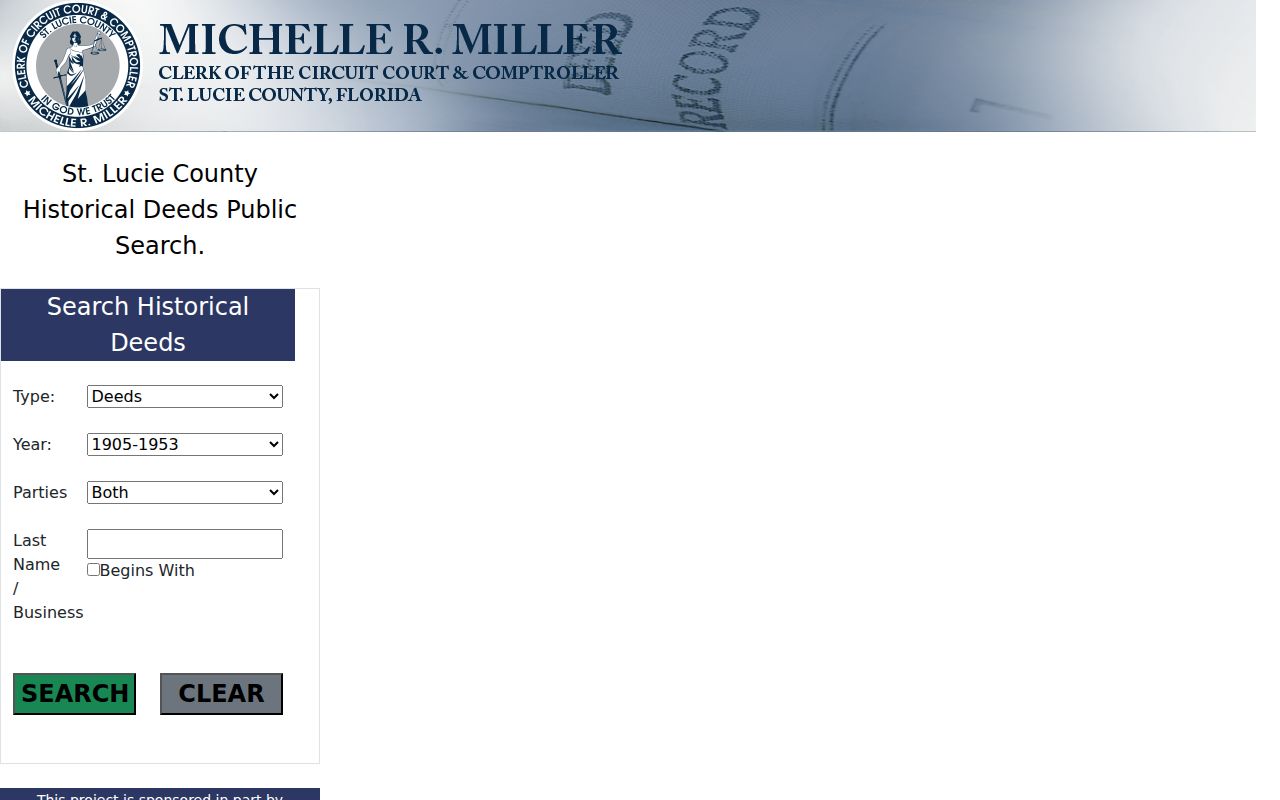
Party role and year guide the historical search, while missing bridge years still call for staff help.
Note: Preserve every book/page and instrument number before moving between portals because stable citations outlast changes to a search interface.
Pair Fort Pierce Household Records
Ownership is only half of a previous residents search. A directory may name a listed householder, spouse, occupation, or address. A census can name people enumerated together and their relationships. The verified 1916 Fort Pierce and St. Lucie County directory is useful, but no official shelf list proves a continuous local directory or criss-cross run. Confirm holdings with the Susan Broom Kilmer Branch or State Library. The collections receive full treatment on the Fort Pierce city directory page.
- Transcribe an entry exactly, including initials, page, street wording, and codes.
- Read that volume’s key instead of expanding abbreviations from another publisher.
- Compare the entry with the nearest public census, such as 1910 or 1920 around the 1916 directory.
- Test the address against the deed’s legal description and the proper map or plat.
- Use a later directory, probate file, death record, or newspaper to explain the next change.
The latest public population schedule is 1950. County libraries provide HeritageQuest, while Ancestry Library Edition is available at library computers. Ask Kilmer staff about microfilm, yearbooks, local files, and obituary help instead of assuming each item is online.
Lawful use. Research past residents for family history, property history, heirs, or civic study. Never use an address trail to watch, harass, or harm a living person.
Map Fort Pierce Address Changes
The May 1924 Fort Pierce Sanborn map has ten public-domain sheets. It shows building footprints, materials, use, and block context, not every occupant. Match its streets and lots to a plat and directory. The 1909 courthouse stood on South Second Street when the road was called Pine Street. The 1928 hurricane later damaged its dome and clock, but this building story does not replace title evidence.
Permits add a building timeline. Fort Pierce moved new online submittals to EPL on July 15, 2024, and Click2Gov stopped functioning February 1, 2026. Search Civic Access by address or permit number. For older or missing files, contact Building or request city records. Keep owner, applicant, contractor, and inspector roles distinct. A permit proves work, not residence.
Maps and permits can explain why a number changed, why a structure appears later, or why two listings describe the same lot. Pair each clue with the legal description before merging identities.
Close Fort Pierce Resident Trails
A deed by an estate, representative, or heirs may explain a final transfer. The Clerk court index covers most cases back to 1993; older probate requires Research staff. Dockets can identify a decedent, petitioner, representative, heirs, and counsel, but probate and family images may be restricted. Treat an index as a finding aid, not the certified file.
The St. Lucie County Tribune began in July 1905 and ran through 1920. Its legal notices, obituaries, society items, and street references help close gaps. The Florida Digital Newspaper Library offers an official research route.

OCR can miss initials and old type, so browse images and search surnames, streets, organizations, and businesses.
For a death fact, consult the Florida death-certificate service. A public copy without cause differs from a restricted cause-of-death copy, confidential for 50 years except to qualified people.
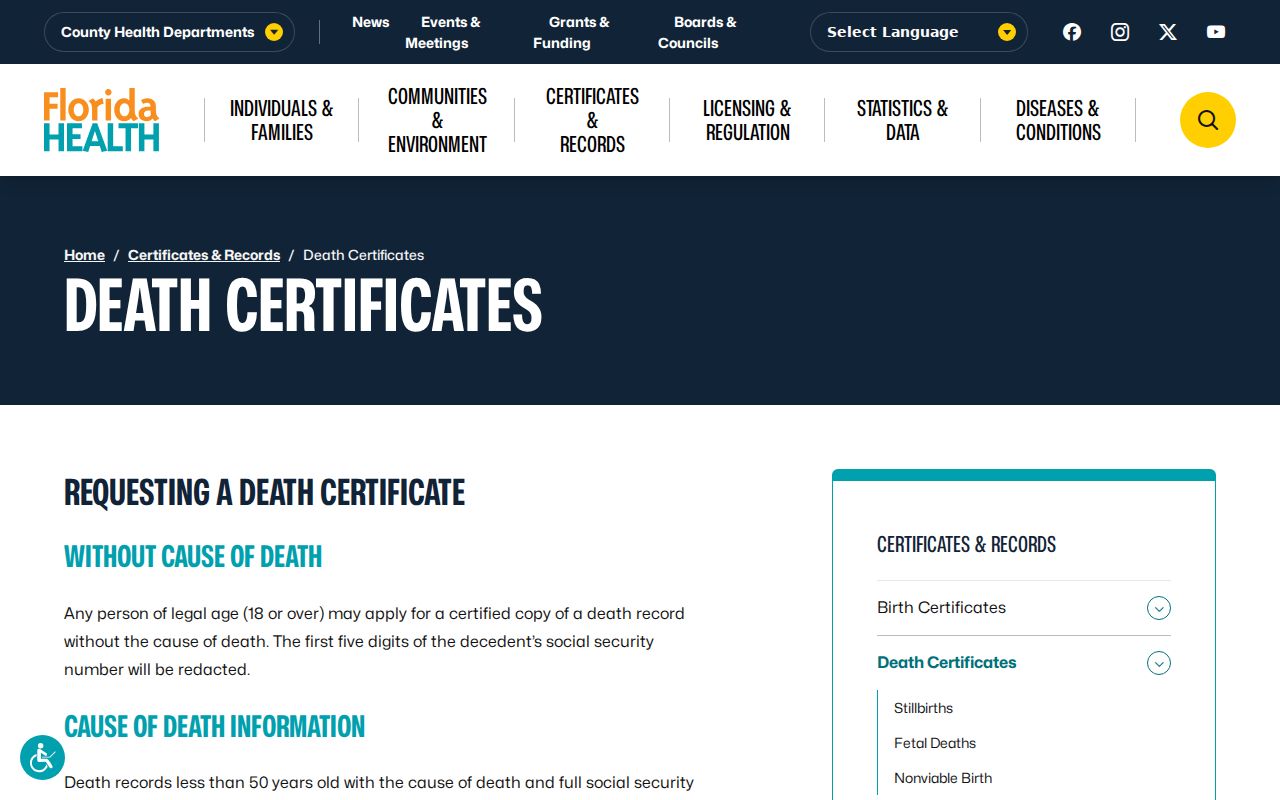
The state page separates a research lead from the rules for an official certificate.
Follow Fort Pierce Beyond 1905
Fort Pierce incorporated in 1901, but St. Lucie County was created from southern Brevard County in 1905. Okeechobee County took western territory in 1917, while Indian River and Martin counties received northern and southern areas in 1925. A person or parcel could stay still while the responsible courthouse changed. Plot each event against the boundary of its time.
The census needs the same care. Fort Pierce appears under Brevard before 1905; 1910 and 1920 St. Lucie schedules cover more territory than today, and 1930 follows the partitions. Enumeration districts, street descriptions, plats, and newspapers can keep an address in its proper jurisdiction. This check prevents a false dead end when past residents vanish from a modern county search.