
Finding Fort Pierce Residents
Start with the kind of fact already in hand. The Saint Lucie County Property Appraiser is the best first stop for a present street address because its roll accepts an owner name, site address, or parcel identification number. A person's name can also be checked in the Clerk's court and Official Records indexes. For an older household, printed directories, census schedules, newspapers, and deed books form a better chain than a modern database.
No official roll is a full list of every person at a home. A parcel record usually names the owner, not each occupant. Voter data has legal limits, and the public self-service lookup is meant to verify a registrant's own status. Directory evidence can also grow stale. A careful Fort Pierce residents directory search treats each result as one lead and confirms it with a second source.
- Check the county property roll by owner name or site address, then note the parcel number and mailing address.
- Use the official Florida voter tool only with the identifying details and lawful purpose the form requires.
- Search the Clerk's Official Records index for deeds, mortgages, liens, and other name-linked filings.
- For an earlier decade, consult city directories, census schedules, newspapers, and historical maps.
- If an index or image is missing, ask the custodian for the record through its counter or request channel.
Fort Pierce Directory Custodians
Fort Pierce is the St. Lucie County seat, so the main directory offices are close at hand. The Clerk combines recorder, court, probate, marriage, and County Commission functions. The Property Appraiser links owners with parcels and street sites. The Supervisor of Elections keeps registration records under Florida law. Municipal material, such as permits and city correspondence, belongs to Fort Pierce itself. For a full address-first method, use the Fort Pierce street directory.
St. Lucie County Clerk
201 South Indian River Drive
Fort Pierce, FL 34950
772-462-6900
Saint Lucie County Property Appraiser
2300 Virginia Avenue
Fort Pierce, FL 34982
772-462-1000
St. Lucie Supervisor of Elections
4132 Okeechobee Road
Fort Pierce, FL 34947
772-462-1500
Fort Pierce Property Search Fields
The Property Appraiser supplies the most direct bridge from a Fort Pierce address to a named owner. Its help page explains that a search may begin with an owner, parcel identifier, site address, or map. Results lead to the property record card, sales links, TRIM notice, exemptions, and assessed and taxable values. The mailing address and the situs, or physical site address, should not be treated as the same fact.
| Search field | Use | Format note |
|---|---|---|
| Owner name | Find parcels tied to a person or entity | Begin with a surname or business name |
| Site address | Find the parcel at a Fort Pierce street location | Use the property address, not the tax-mailing address |
| Parcel ID | Open one exact county parcel | Best for avoiding same-name errors |
| Map search | Browse nearby lots and mapped reports | Useful when the street number is uncertain |
The Property Appraiser website help is worth checking before a broad name search. It explains the actions attached to each record and helps distinguish the owner's mailing address from the land being assessed.
Fort Pierce Deeds Span Eras
St. Lucie County Official Record books begin in 1905, but online access is split into several routes. The Clerk offers a historical deed search for 1905 through 1960. Its current Recording Department page says ordinary Official Records are online from 1980 forward, while the years between those spans are handled separately. Older Clerk pages have stated other modern start dates, so a failed web search is not proof that no document exists.
The safe fallback is the Clerk's Research Department, the record books, or an office terminal. In the current Acclaim index, a search can use a party name, book and page, instrument number, or simple search. Free registration adds date-range and advanced options. Some images remain restricted even when the public index confirms the filing.
Open the Clerk's public-record request form when the needed item is not exposed online.
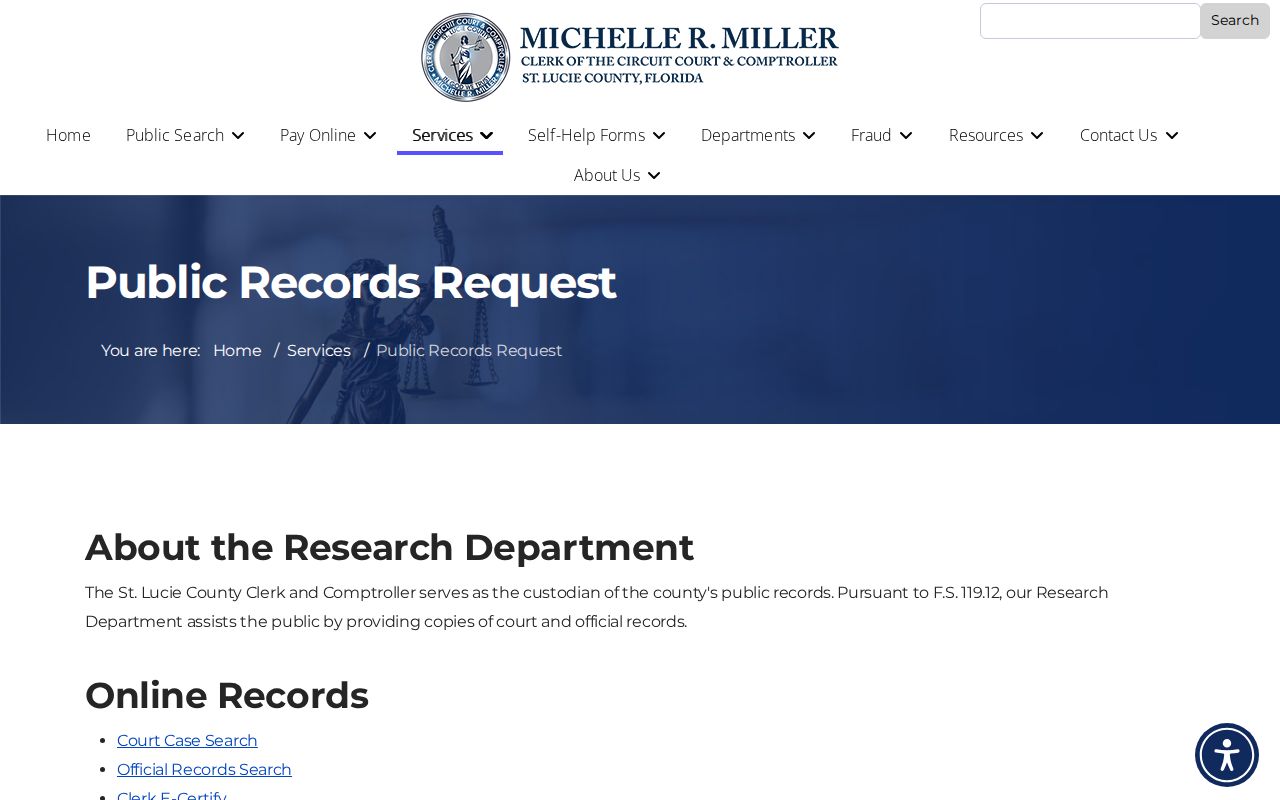
The request route supplies a practical bridge between a directory name and an older or nonpublic-web record held by the Clerk.
Current Fort Pierce Resident Rolls
Modern directory evidence is divided by purpose. Property records cover owners. Recorded instruments cover people or firms named in land and lien filings. Court indexes name parties in public cases. Voter systems verify registration under narrower rules. City records add permit applicants, board members, and other people named in municipal files. None of these is a household census, but together they make a useful Fort Pierce residents directory.
| Source | Who It Lists | Keeper | Access |
|---|---|---|---|
| Property roll | Parcel owners | Property Appraiser | Free portal and office inspection |
| My Voter Record | The registrant being verified | Supervisor of Elections | Official self-service lookup |
| Official Records | Parties to deeds, mortgages, and liens | County Clerk | Free index; image limits vary |
| Court Case Search | Parties in public county and circuit cases | County Clerk | Free index and selected documents |
| City public records | People named in city permits and files | Fort Pierce custodian | Portal, email, phone, mail, or counter |
Choose a roll by the question it can answer. Ownership belongs with the Property Appraiser. A deed party belongs in Official Records. A local case party belongs in the court index. For the one-name process and its same-name checks, follow the Fort Pierce resident lookup workflow.
Fort Pierce Court Party Search
The St. Lucie Clerk's Court Case Search covers county and circuit matters. It accepts a case number or party name and can reveal the case type, filing date, party role, docket entries, and selected documents. Probate can be useful in an heir search, while civil dockets may distinguish two people with the same name through dates and case context. An index hit is not the same as a certified court file.
View the St. Lucie Court Case Search before sending a record request.
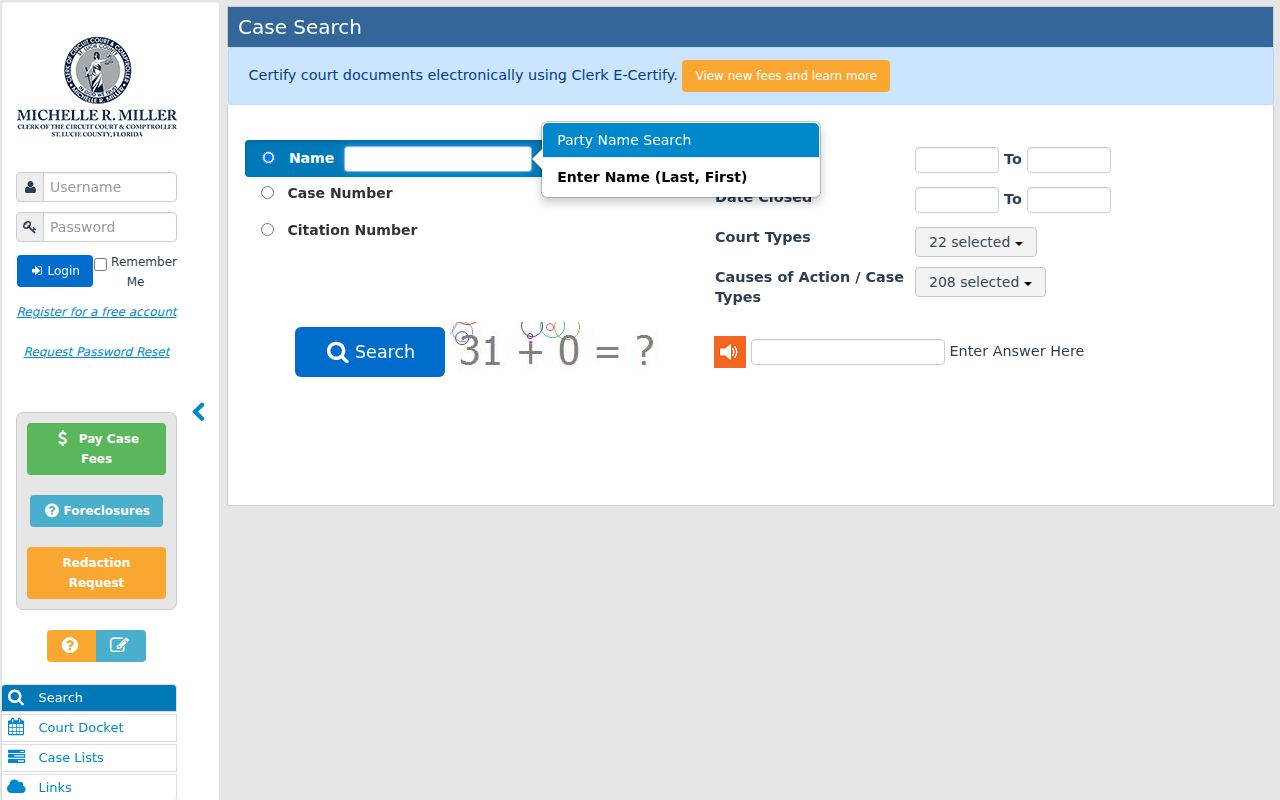
The public screen helps identify the right case number, which makes a counter or written request more precise.
Florida Voter Privacy Boundaries
Florida voter-registration information is generally public under section 97.0585, Florida Statutes, yet the public does not receive every field. Social Security numbers, driver-license or state-identification numbers, and the source of an application stay confidential. Protected-address participants and certain exempt people receive added safeguards. The county and state lookup tools are therefore verification systems, not open block-by-block household exports.
The Florida Voter Information Lookup asks for identifying inputs to return the matching registration details. Someone seeking broader lawful public data should contact the Supervisor of Elections and describe the existing record requested rather than assume the self-service form exposes the full roll.
Note: A missing voter result may reflect eligibility, matching inputs, or legal protection, not proof that a person left Fort Pierce.
Fort Pierce Records Request Routes
Florida's Constitution and Chapter 119 create a broad right to inspect existing, nonexempt public records. A requester ordinarily does not need a special form or a stated purpose. Custodians must respond in good faith within a reasonable time, but the law does not promise a fixed number of days. Authorized copy charges may apply, along with reasonable service costs when a request requires extensive staff or technology use.
Use the office that created the record. The County Clerk has a web form for court, official, and financial material and reports a usual completion range of two to seven business days. Fort Pierce accepts municipal requests through its city custodian channels. Property Appraiser records can be inspected or copied through that office. A focused request should name the record type, date span, person or address, and preferred format.
Review Fort Pierce public-record request options for city-held material.
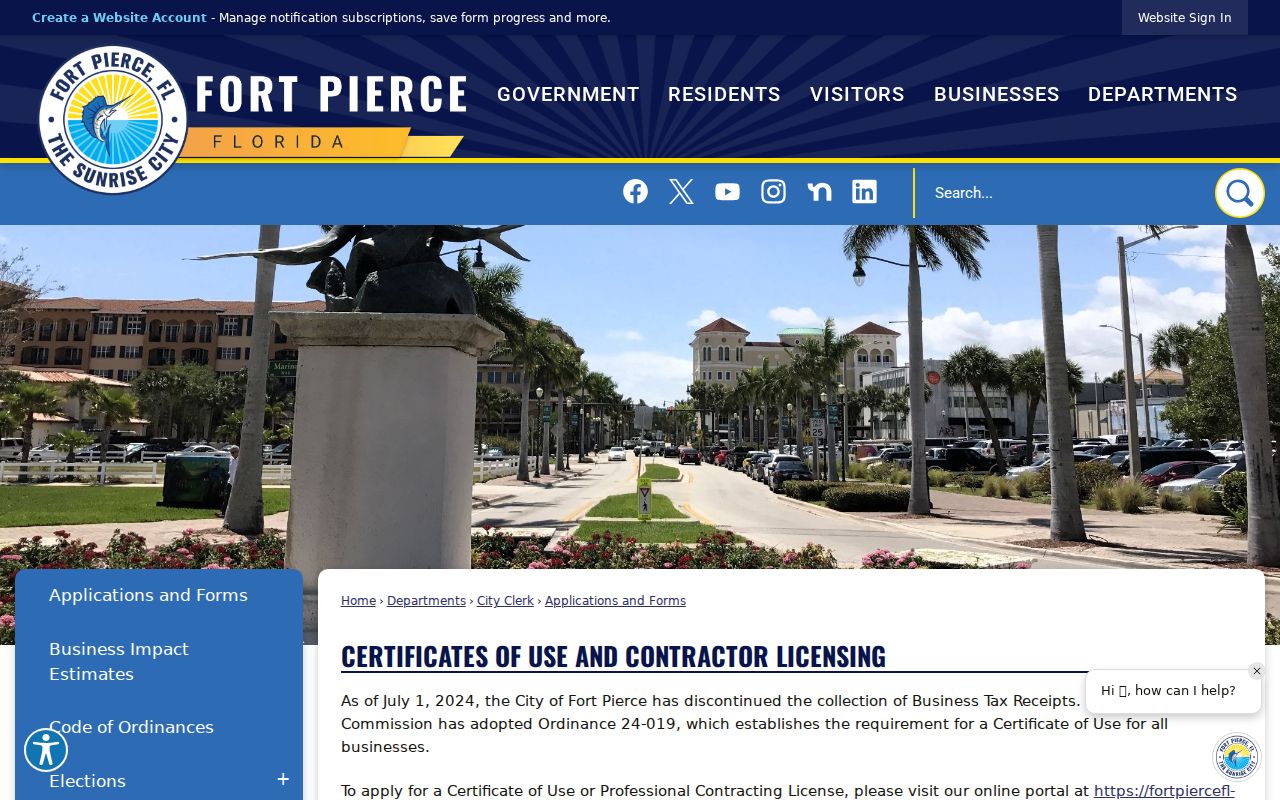
The city route is the right fallback for municipal permits, correspondence, and other Fort Pierce files that county portals do not keep.
Official Rolls and Finder Sites
Official records and commercial people-finder products serve different roles. County and state systems identify the custodian, legal context, and update process. Commercial products combine data from many sources, which may be fast but can merge names, retain old addresses, or hide source dates. A Fort Pierce residents directory search is strongest when an official record, not an unexplained aggregate, supports the conclusion.
| Source type | Strength | Limit |
|---|---|---|
| Official county or state roll | Named custodian and defined record purpose | Each system covers only its own record class |
| Library or archive collection | Historical context and dated editions | Coverage may have gaps and may require a visit |
| Commercial compilation | Broad name and address matching | Source age and accuracy may be unclear |
Verify a match with two independent records. Parcel IDs, instrument numbers, case numbers, and dated directory editions are better anchors than a name alone.
Fort Pierce Directory Terms
Several short terms recur across the county systems. Knowing what they mean prevents a search from turning the wrong field into a claim about where someone lives.
- Roll
- An official list created for a set purpose, such as assessment or voter registration.
- Index
- A finding aid that points to a document; it is not always the full image or certified record.
- Parcel
- A mapped unit of land with its own county identification number.
- Situs address
- The physical location of a parcel, which can differ from the owner's mailing address.
- Criss-cross directory
- A historical directory arranged by street and house number instead of only by surname.
These distinctions matter most when the same person owns several parcels or receives tax mail away from Fort Pierce.
Fort Pierce Safety Registers
Some public systems are not general resident rolls but can confirm a narrow fact. The St. Lucie County Sheriff's Office publishes an inmate lookup. The Florida Department of Corrections runs a statewide offender search, and the Florida Department of Law Enforcement provides a sexual-offender and predator search with name and neighborhood modes. Use each record only for the status it actually reports.
Open the St. Lucie County inmate lookup to check present county custody.

The custody page is time-sensitive. A past result should not be read as a current address or current legal status.
Open the FDLE registry search for the state-maintained registry.
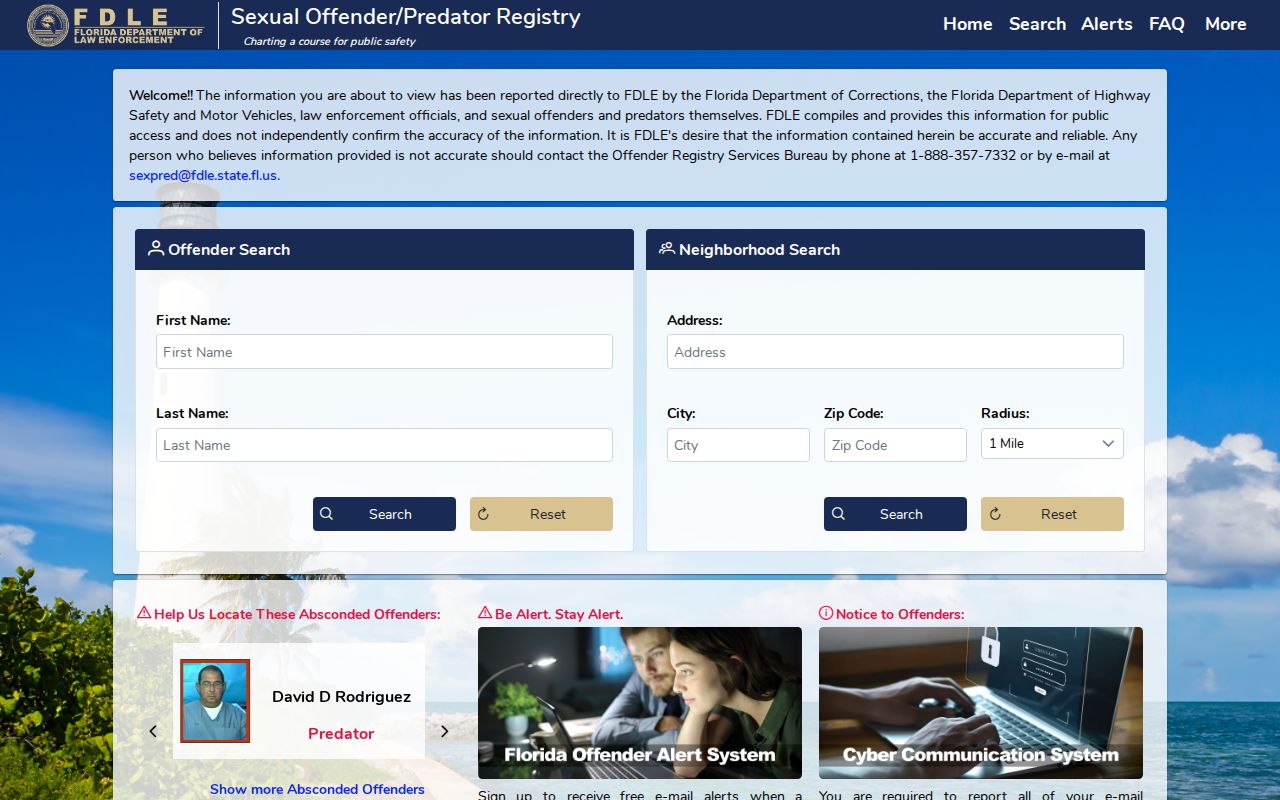
The FDLE screen provides the official search modes and alerts, which are more reliable than copied listings with no update date.
Fort Pierce Records Changed Address
The county's courthouse story explains why old addresses and jurisdictions need context. St. Lucie County was created from southern Brevard County in 1905. Before its courthouse opened, court sessions met in the Fort Pierce Improvement Club hall on North Second Street and public offices used other rooms. The 1909 courthouse then stood on South Second Street, which contemporary accounts also called Pine Street.
Fort Pierce paid $1,500 for the courthouse and jail site. The building and furnishings cost nearly $40,000. Its clock had five-foot dials and a 700-pound bell. A 1928 hurricane badly damaged the dome, after which the dome and clock were removed. Those details come from the St. Lucie Historical Society courthouse history.
The lesson for a resident search is practical. A record can name a street that was later renamed or a building that no longer looks the same. Match the date to the street name, recorded plat, and county boundary before deciding that two addresses refer to different places.
County lines also moved around Fort Pierce. Okeechobee County took western territory from St. Lucie in 1917, and Indian River and Martin counties received northern and southern portions in 1925. A person or parcel could stay in place while its record custodian changed. Fort Pierce appears under Brevard County before 1905; the 1910 and 1920 St. Lucie census schedules cover a larger county than the one shown on a current map. Search the event date against the boundary then in force before concluding that a deed, court file, or census entry is missing.
Historical Fort Pierce Directories
The local historical shelf fills gaps that present-day rolls cannot. An Indian River County Main Library surname index verifies the title 1916 Fort Pierce, Florida City Directory and St. Lucie County Directory, but no open page scan was located. The St. Lucie County Library genealogy resources, State Library and Archives, Florida Memory, and the St. Lucie Historical Society are the main starting points. No official open, full-text run of Fort Pierce directories was found, so catalog help, microfilm, and staff requests remain important.
A dated entry may give a resident's name, spouse, occupation, employer, home address, and an owner or renter mark. Abbreviation keys must be read with the entry. Later criss-cross editions can reverse the search by putting a street and house number first. The Fort Pierce city directory page covers those collections and the year-by-year tracing method in depth.
Pair a directory edition with the nearest census, deed, obituary, or Sanborn fire-insurance map. That match can show when a household first appears, when a street number changes, and whether the named person owned the lot or merely lived there. It also keeps the Fort Pierce residents directory grounded in dated evidence rather than memory.